Primary Rhinoplasty with Columella and Midface Refinement for a Naturally Balanced Nose and Philtrum
Rhinoplasty / Nasal Augmentation with Autologous Tissue / Nasolabial Angle Plasty / Rib Cartilage Grafting / Alar Base Reduction / Septal Extension / Nasal Tip Reduction
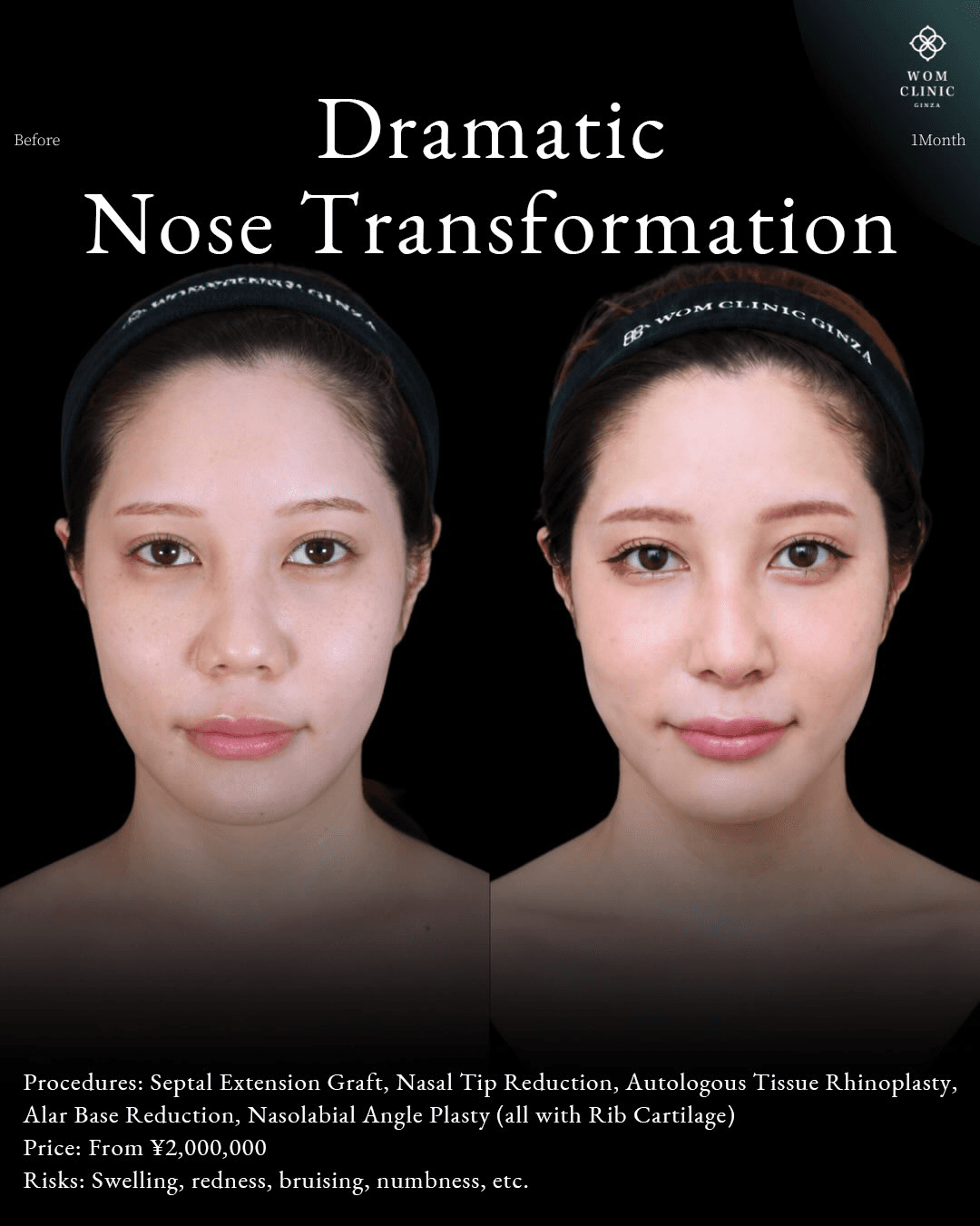
Patient Concerns
The patient visited our clinic with the following concerns:
- The columella was not visible from the front
- The philtrum appeared long
These were the main concerns that prompted the consultation.
The patient also expressed the following preference:
- Natural definition that harmonizes with the face, without making the nose excessively high or prominent
The examination revealed the following features:
- Slightly weak structural support for the nasal tip
- Insufficient columellar show
- A flat midface
- Slightly thick nasal skin with limited elasticity
These findings informed the surgical plan.
These skeletal features are common among Asian patients, and increasing nasal height alone may not improve overall facial balance.
For this reason, the surgical plan focused on
creating three-dimensional definition in both the nose and the midface.
This was the goal that guided the surgical planning.
Why Does the Philtrum Look Long?
Many people who feel that their philtrum looks long do not actually have an unusually long philtrum. Among Asian patients, features such as
- A retracted columella
- A short nose
- A flat midface
- Weak cartilage supporting the nasal tip
can make the philtrum appear relatively longer.
For this reason, rather than focusing solely on shortening the philtrum,
adjusting the position of the columella and the balance of the nasal tip
can sometimes make a substantial difference in overall appearance.
Surgical Procedures
The following procedures
- Septal extension using rib cartilage
- Nasal Tip Reduction
- Nasal augmentation with autologous tissue
- Nasolabial Angle Plasty and Alar Base Reduction
were performed in this case.
All procedures used the patient’s own tissue. By building the nasal structure with autologous tissue rather than synthetic implants, we aimed to achieve long-term nasal stability.
Before and After【Septal Extension with Rib Cartilage + Nasal Tip Reduction + Nasal Augmentation with Autologous Tissue + Nasolabial Angle Plasty and Alar Base Reduction】
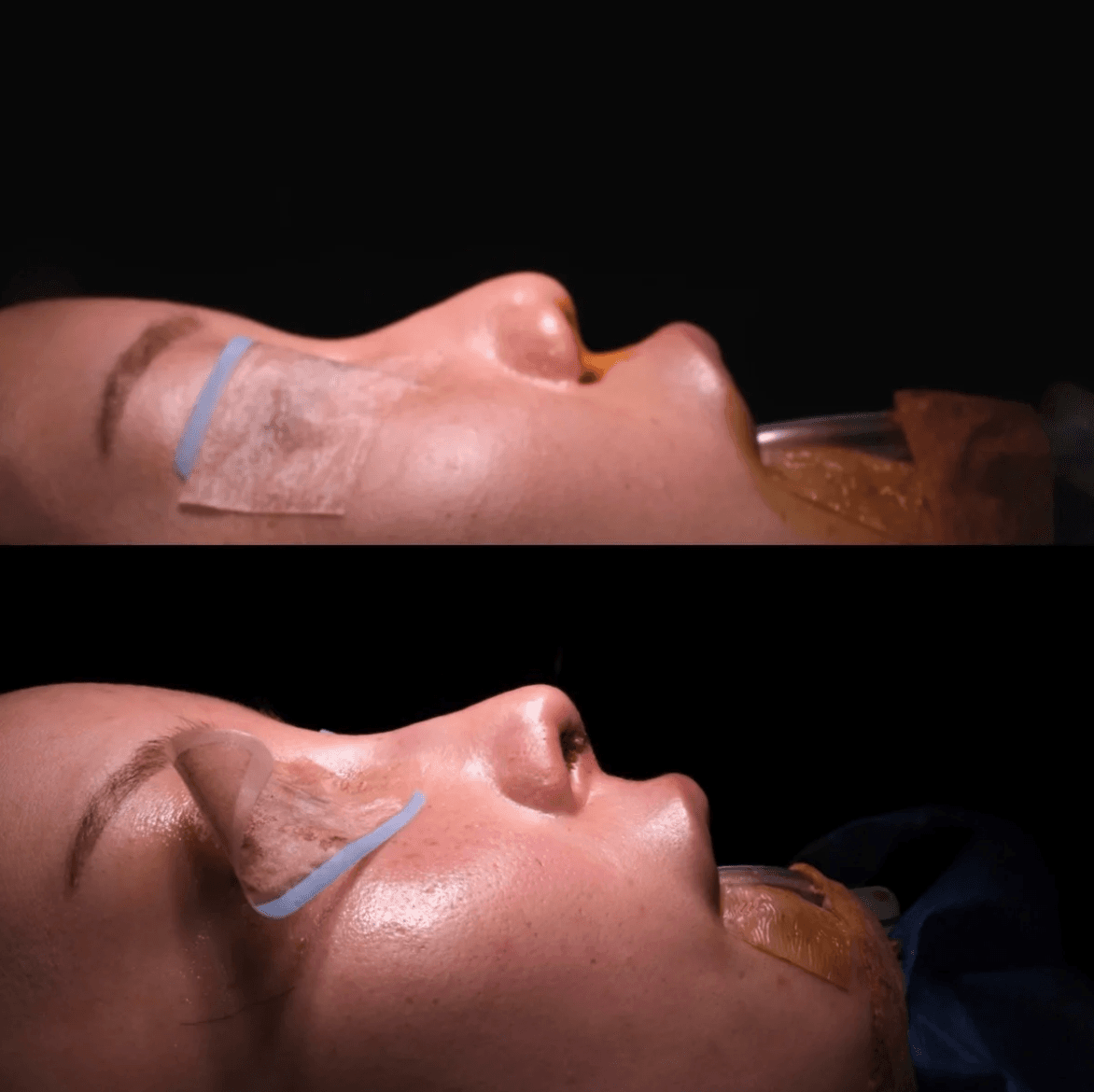
Key Surgical Considerations
Creating a natural-looking columella
In this case, we focused on bringing the columella into an appropriate position. Making the columella more visible can:
- Make the philtrum appear shorter
- Make the nostrils less noticeable
- Improve facial balance from the front
These changes contribute to a more balanced appearance.
However, excessive columellar projection can look unnatural, so we carefully fine-tuned its position in relation to the overall facial balance.
Adding definition to the midface
Increasing nasal height alone can sometimes make the nose stand out disproportionately.
In this case, we combined columella base and paranasal augmentation to add definition to the midface as well. This can:
- Make the nose appear naturally higher
- Reduce the appearance of protrusion around the mouth
- Add depth to the facial profile
Together, these changes give the face a more three-dimensional appearance.
Adapting the technique for skin with limited stretch
This patient had slightly thick nasal skin with limited stretch. Lengthening a short nose requires more than simply placing cartilage grafts.
We also tailored the dissection and tissue release techniques to achieve sufficient length while minimizing strain on the skin and soft tissues.
Before and After【Septal Extension with Rib Cartilage + Nasal Tip Reduction + Nasal Augmentation with Autologous Tissue + Nasolabial Angle Plasty and Alar Base Reduction】
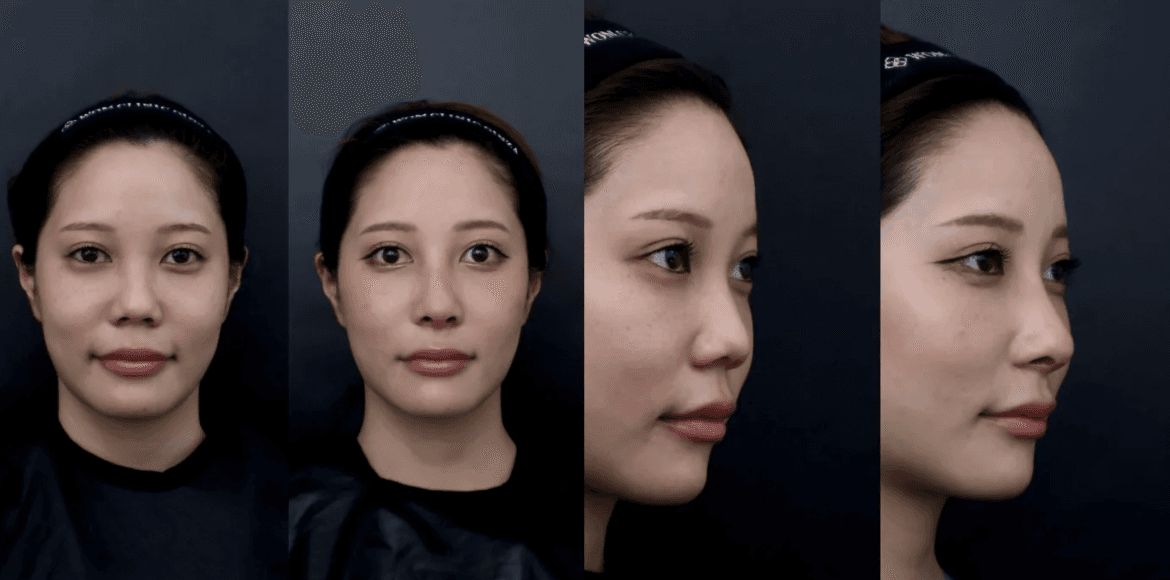
Changes Visible in the Photos
Front View
Before surgery, the columella was barely visible, and the nostrils were prominent. After surgery, the columella is naturally visible, and the improved nasal tip position makes the nostrils less noticeable.
The philtrum also appears shorter, creating better overall facial balance.
Oblique View
The contour flows smoothly from the nasal bridge to the tip, with a more natural transition to the midface. Rather than the nose alone appearing higher, the entire face has gained three-dimensional definition.
Before and After【Septal Extension with Rib Cartilage + Nasal Tip Reduction + Nasal Augmentation with Autologous Tissue + Nasolabial Angle Plasty and Alar Base Reduction】 — Side View
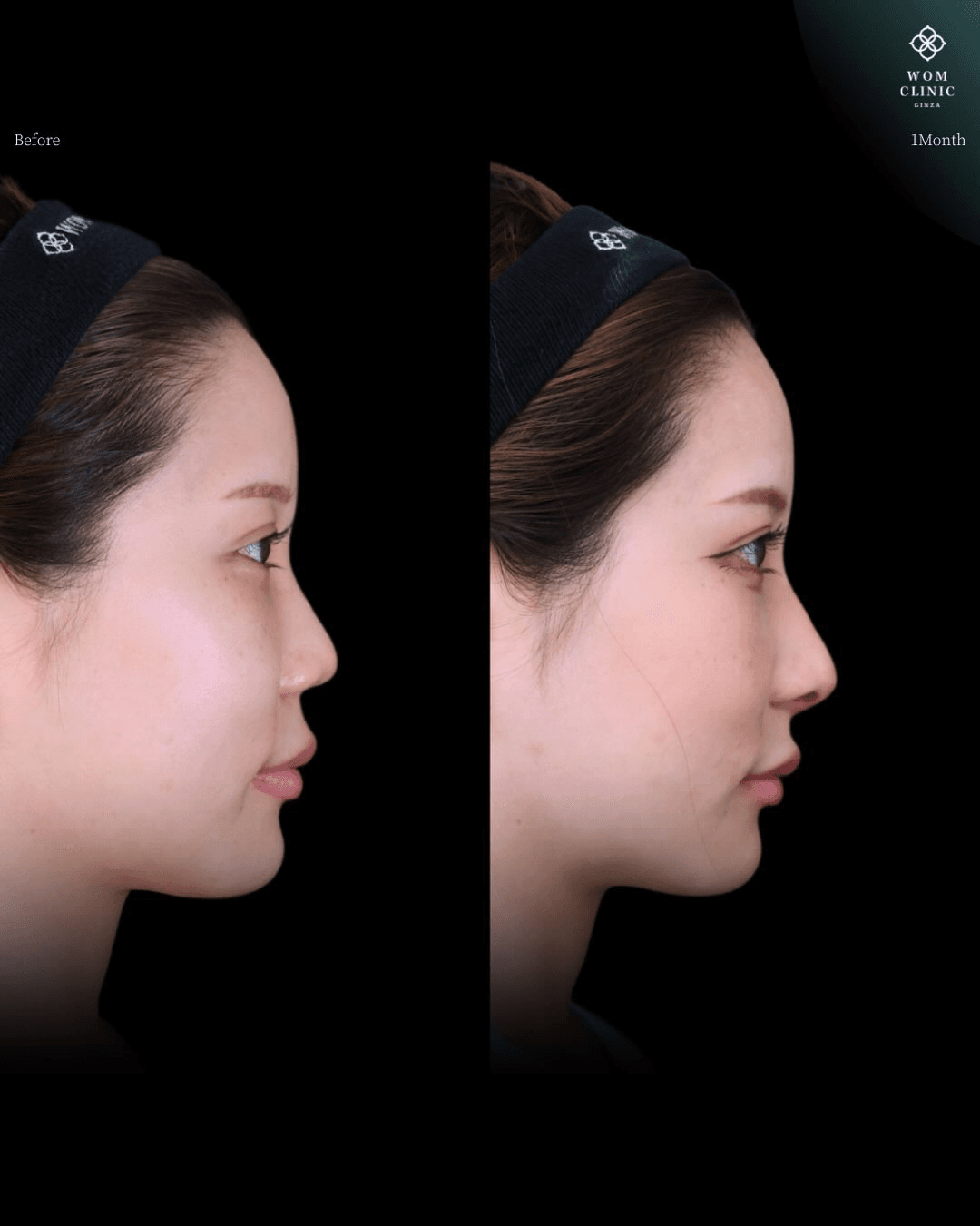
Side Profile
In the side profile, the improved columella position has significantly changed the balance between the nasal tip and the mouth.
The E-line is also more naturally balanced, creating a mature and elegant appearance.
What to Expect After Surgery
Changes to the columella and midface are visible immediately after surgery, while the nasal tip gradually settles over several months, developing a more natural contour.
For patients with thicker skin, the final result may take a little longer to develop. The surgical plan is designed to achieve a stable shape over the long term.
Comments from Dr. Nakai
The most important consideration in rhinoplasty is
to assess the balance of the entire face, rather than focusing on the nose alone.
A design focused solely on the side profile can make the face appear longer from the front or make the nose look out of harmony with the rest of the face.
The golden ratio is only a reference. I believe what truly matters is creating the most natural and harmonious design for each patient’s skeletal structure and facial features.
The nose is an important feature at the center of the face, but it is also part of the face as a whole. Considering how it connects with the midface and the area around the mouth helps create a natural result that patients can remain satisfied with for years to come.
I continue to present on Asian rhinoplasty and midface contouring at conferences in Japan and internationally, while pursuing collaborative research and exchanging surgical techniques with physicians overseas.
By adapting insights gained worldwide to the skeletal characteristics of Japanese and other Asian patients, I strive to achieve more natural rhinoplasty results with long-term stability.