【Revision Rhinoplasty】Improving a Rounded, Drooping Nasal Tip — Alar Rim Elevation Refines Even the Visibility of the Nostrils
Alar rim lift / Auricular cartilage graft / Nasal Tip Reduction / Revision rhinoplasty
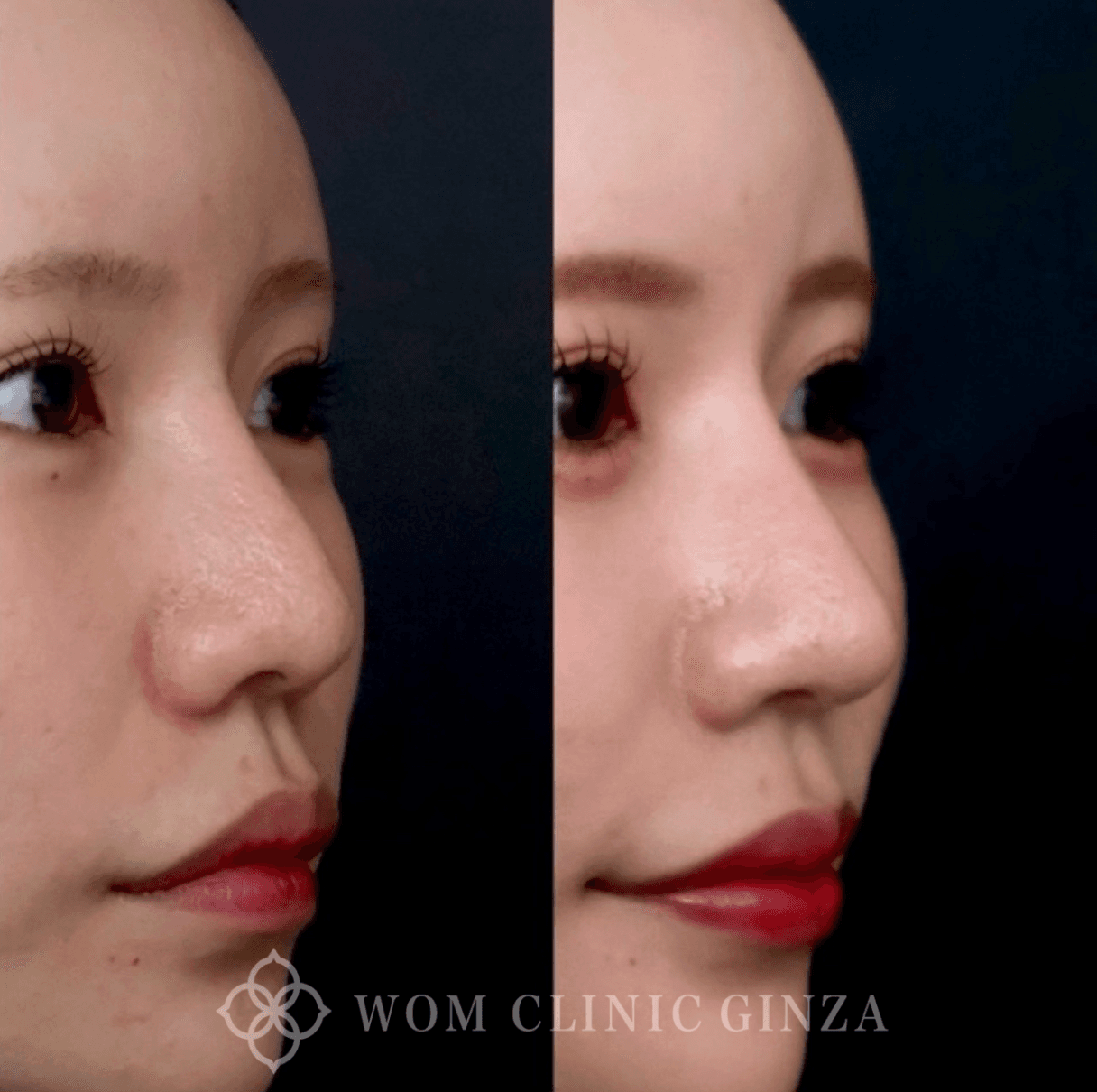
Consultation concerns
The patient had previously undergone rhinoplasty and visited our clinic with the following concerns:
- A rounded nasal tip
- The nasal tip had gradually become lower over time
These concerns led the patient to seek revision treatment.
Revision rhinoplasty involves more than adjusting the height and shape of the nose.
The visibility of the nostrils and the overall frontal balance must also be carefully evaluated.
Controlling the Visibility of the Nostrils
There are two main approaches to controlling how visible the nostrils are.
▶ Procedures that make the nostrils less visible
- Lowering the nasal tip
- Increasing columellar show
- Improving the alar–columellar relationship (ACR)
▶ Procedures that make the nostrils more visible (to an appropriate degree)
- Lifting the alar rim
- Reducing excess skin coverage
- Creating a lighter, less heavy appearance
In this case, we performed the latter:
👉 Alar Rim Lift.
Although the aim is to make the nostrils more visible,
the key is to achieve a balanced result without making them overly visible.
Procedures Performed
As this was a revision case, the following procedures were performed based on the patient’s condition.
- Complex revision of surgery performed at another clinic
- Nasal tip refinement
- Auricular cartilage grafting
- Nostril rim elevation
While refining the structure of the nasal tip,
the nose was designed with careful consideration of nostril visibility.
Before-and-After Photos: Nasal Tip Reduction, Auricular Cartilage Grafting, and Alar Rim Elevation *Complex Revision Surgery
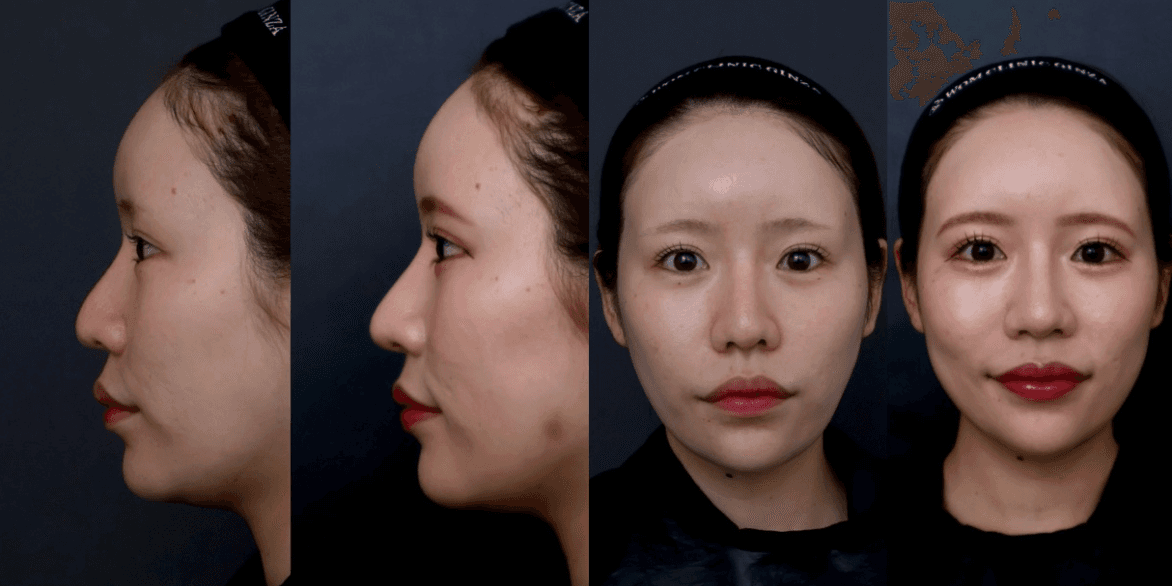
Key Design Points
▶ A sharper, more refined nasal tip
Through nasal tip reduction and cartilage grafting,
we reduced the roundness of the nasal tip and created a sleeker, more refined contour.
▶ Reducing the “heaviness” with alar rim elevation
When the nasal skin excessively overlaps the nostrils,
- the nose can appear heavy
- the nasal tip can look poorly defined
- it can be difficult to achieve an elegant appearance
These are some of the impressions it can create.
By appropriately elevating the alar rims, as in this case,
- skin overlap is reduced
- the nose appears more open and refined
- the frontal appearance becomes lighter
These improvements can be achieved.
👉 Put simply, this is a procedure that reduces the visual heaviness of the nose.
◼️ Alar Rim Elevation Explained
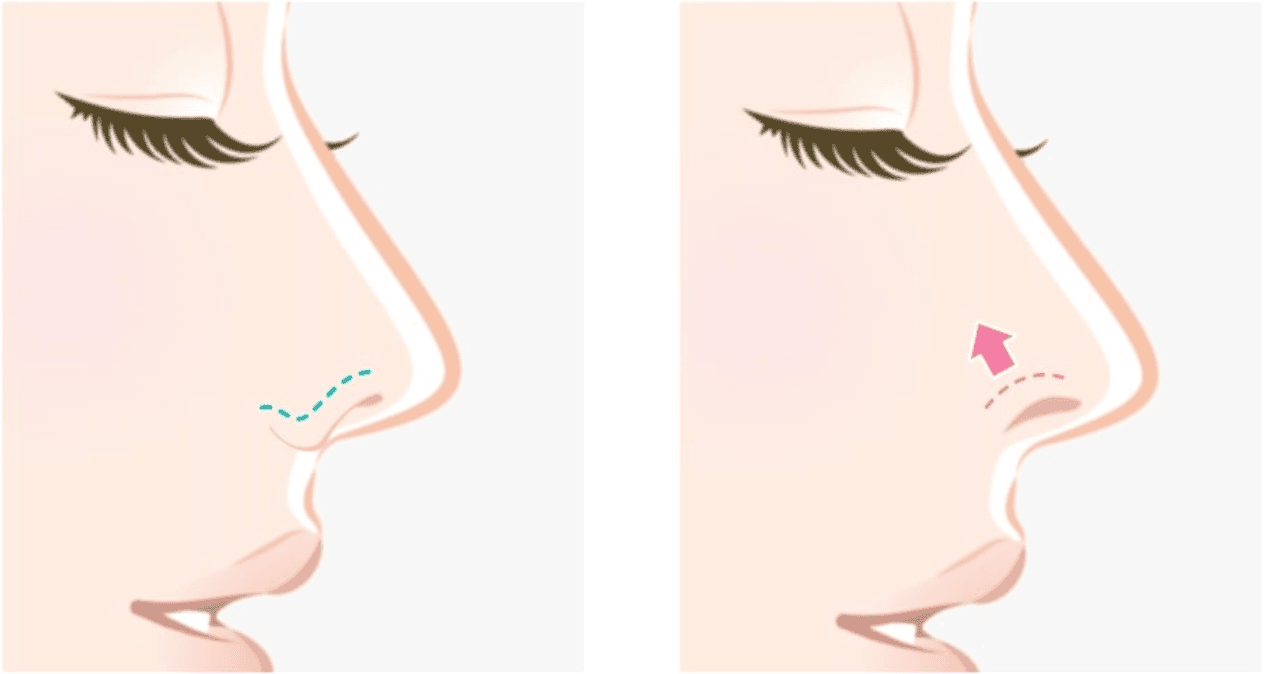
▶ Fine-tuning the position of the nasal tip
In this case, we also made a subtle adjustment to lower the nasal tip.
This produced the following effects:
- the nostrils are less visible
- the philtrum appears shorter
- the overall facial balance is improved
Postoperative Changes
Front View
- The visibility of the nostrils has been naturally improved
- The nasal tip appears sharper
- The overall appearance is lighter and more elegant
Oblique View
- The nasal tip contour is more refined
- The heaviness has been reduced, creating a more sophisticated appearance
Before-and-After Photos: Nasal Tip Reduction + Auricular Cartilage Grafting + Alar Rim Elevation *Complex Revision Surgery

⚠ Important Considerations for Alar Rim Elevation
Alar rim elevation is an extremely delicate procedure.
If too much tissue is removed,
- the nostrils may become overly visible
- the nose may look unnatural
- revision surgery may become difficult
Therefore,
👉 determining exactly how far to elevate the alar rim is extremely important.
Even millimeter-level adjustments can affect the outcome.
What Matters in Revision Rhinoplasty
When revising a rhinoplasty,
- the original nasal structure
- scar tissue
- skin condition
- the amount of remaining cartilage
must be accurately assessed.
Based on this assessment, it is essential to clearly discuss:
✔ What can be achieved
✔ What cannot be achieved
✔ Potential risks
and ensure that these points are fully understood.
Setting realistic goals is essential.
Summary
In this case, we:
- reduced the roundness of the nasal tip
- reconstructed the height of the nose
- adjusted the appearance of the nostrils through alar rim elevation
Through these procedures, we achieved:
👉 A lighter, more elegant, and well-balanced nose
as the final result.
For Those Considering a Change to the Appearance of Nose
In rhinoplasty,
- the shape of the nasal tip
- the height of the nasal bridge
- the visibility of the nostrils
all contribute to the overall balance.
“What would make the nose look more refined?”
“What changes would create a naturally beautiful result?”
Taking these considerations into account,
we use simulations during the consultation to recommend a suitable treatment plan.
If you are interested, please feel free to schedule a consultation with us.