Complex Revision After Septal Extension: Advanced Surgery to Correct Deviation and Irregularities
Rhinoplasty / Alar Rim Lowering / Revision Surgery / Auricular Cartilage Grafting / Tip Plasty

Rhinoplasty That Restores Both Function and Aesthetics—even in Complex Revision Cases
Complex revision surgery following rhinoplasty is an exceptionally challenging field.
Revision techniques can be broadly divided into two approaches.
1. Rebuilding the framework from the ground up
This approach involves removing all cartilage and bone structures used in the previous surgery and rebuilding a new, stable framework. Although it requires extensive surgery, it can provide reliable and reproducible results.
2. Preserving the existing framework while making targeted adjustments
This approach preserves structures that can be retained while improving the nasal shape through targeted grafting and reshaping. The goal is to achieve a beautiful, balanced result while minimizing tissue damage.
Both approaches require an equally advanced level of surgical expertise. Preoperative CT scans and analysis of the internal nasal structures are used to carefully determine which areas should be preserved and which should be corrected. The optimal approach also varies depending on the type of change desired by the patient.
This Case
The patient was satisfied with the height of their nose but wished to correct its irregularities and deviation.
The following procedures were performed:
- Complex Revision Surgery
- Tip Plasty
- Auricular Cartilage Grafting
- Alar Rim Lowering
Photos Before and Immediately After Complex Revision Surgery, Tip Plasty, Auricular Cartilage Grafting, and Alar Rim Lowering
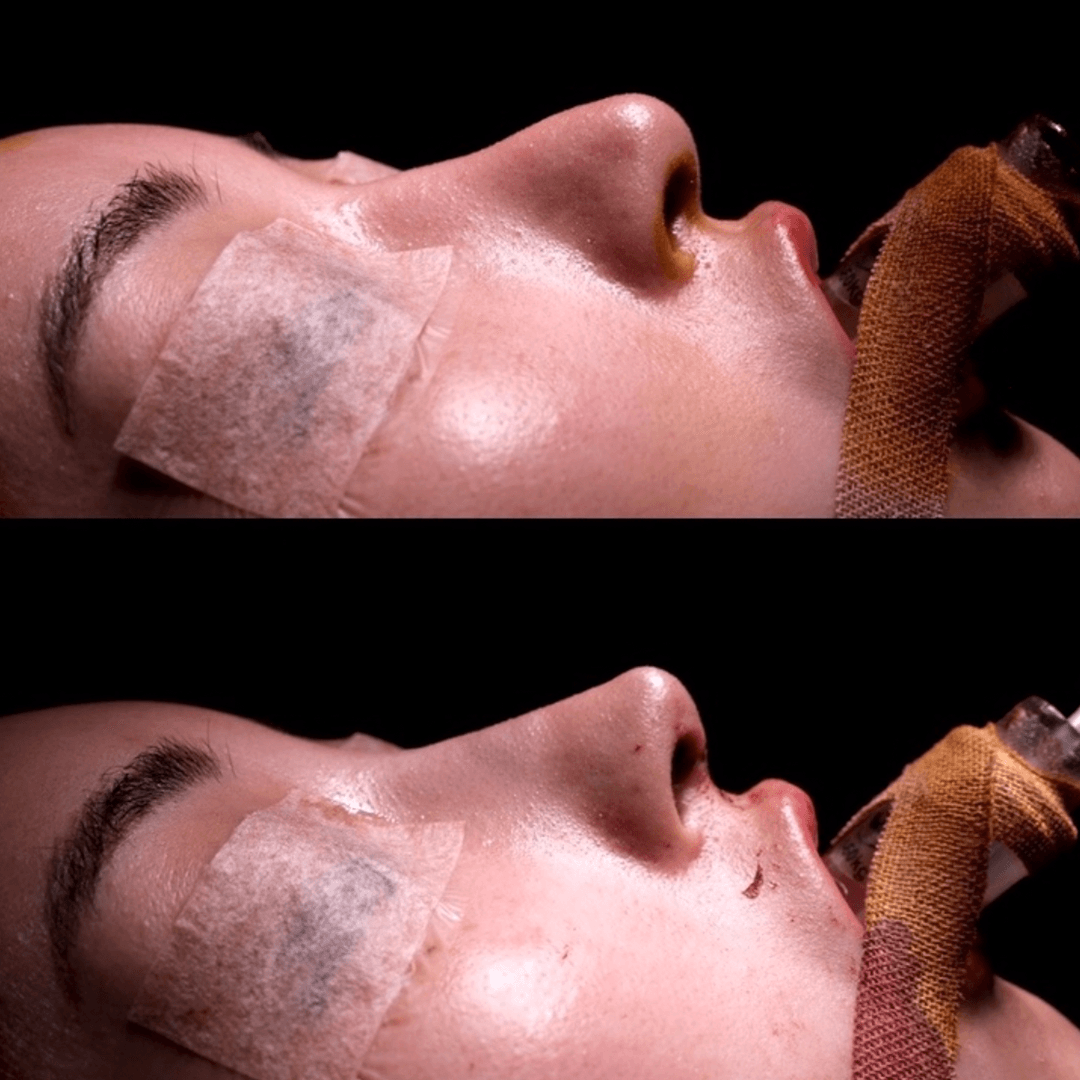
Key Points of the Revision
- Improvement of nasal bridge irregularities and a drooping nasal tip
Part of the costal cartilage used in the previous surgery had become curved, affecting the nasal bridge. This area was carefully adjusted to smooth out the irregularities.
- Correction of frontal nasal deviation
The asymmetry and tilt were corrected, significantly improving the overall balance. In the postoperative photos, the nostrils also appear more natural.
- Changes to the side profile
The roundness of the nasal tip was reduced, and its angle was finely adjusted to improve the balance of the nasal length. This created a natural and refined profile.
Before-and-After Photos of Complex Revision Surgery, Tip Plasty, Auricular Cartilage Grafting, and Alar Rim Lowering
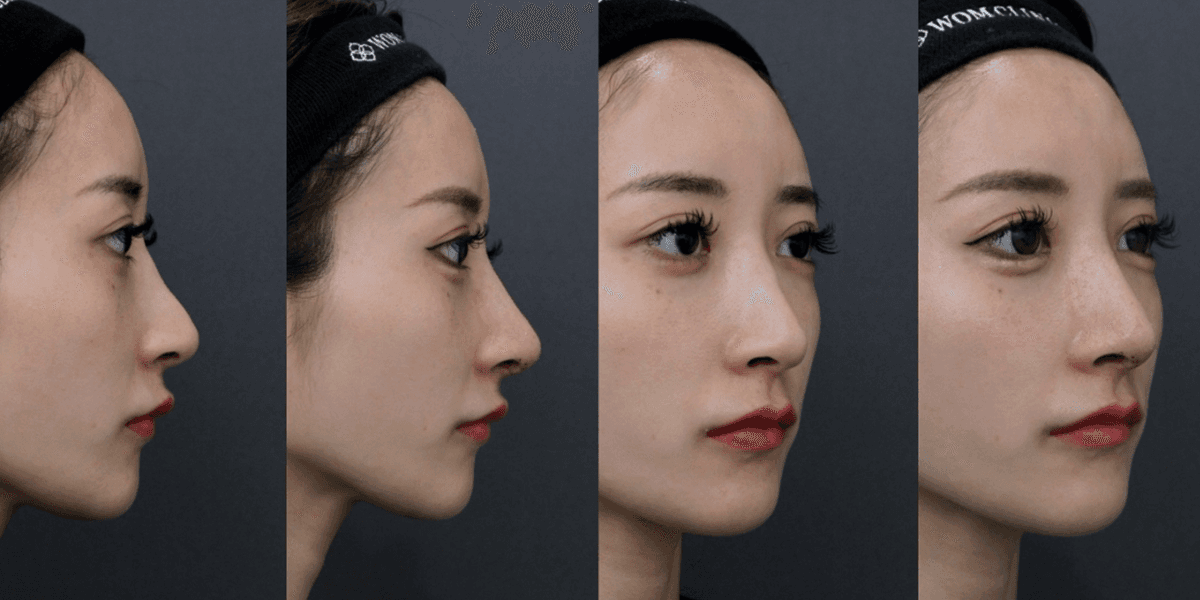

From the frontal view, the nasal deviation and rounded tip that had previously concerned the patient were improved, while the appearance of the nostrils was also refined for a more natural look. The patient was delighted, saying, “The impression of my nose from the front has changed dramatically,” and was pleased with the well-balanced result.
Personal Before-and-After Photos *Provided by the Patient

Expertise Required for Complex Revision Surgery
Revision surgery after septal extension is far more complex than a standard repeat procedure.
While carefully assessing the condition of the skin and cartilage, the nasal framework must be redesigned to provide:
- Sufficient structural support
- Aesthetic balance
- Long-term stability
All three of these elements must be incorporated into the reconstructed design.
Our clinic has treated numerous complex revision cases. Compared with primary surgery or minor revision, these procedures require more precise judgment and carefully tailored techniques.
If you have given up because you believe revision surgery is too difficult, we encourage you to consult with us.